

Introduction to License Plate Recognition (LPR) System
Introduction to License Plate Recognition (LPR) System
Vehicle management is an important aspect, especially for special parking lots, large campuses, government institutions, and residential communities. These facilities require strict real-time management of various vehicles, close monitoring of entry and exit times, and registration and identification of all vehicles (including internal and external ones). In large-scale areas with heavy vehicle traffic, manual verification for each vehicle is time-consuming, inefficient, and makes security management and data retrieval difficult. To improve this outdated management model, which is inconsistent with the needs of modern parking facilities, campuses, and government institutions, it is necessary to achieve automation and intelligent management of vehicle operations. By adopting a computer network-based management system, vehicles at all entrances and exits can be effectively and accurately monitored and controlled. The system should provide corresponding application software to achieve efficient and intelligent management of the premises.
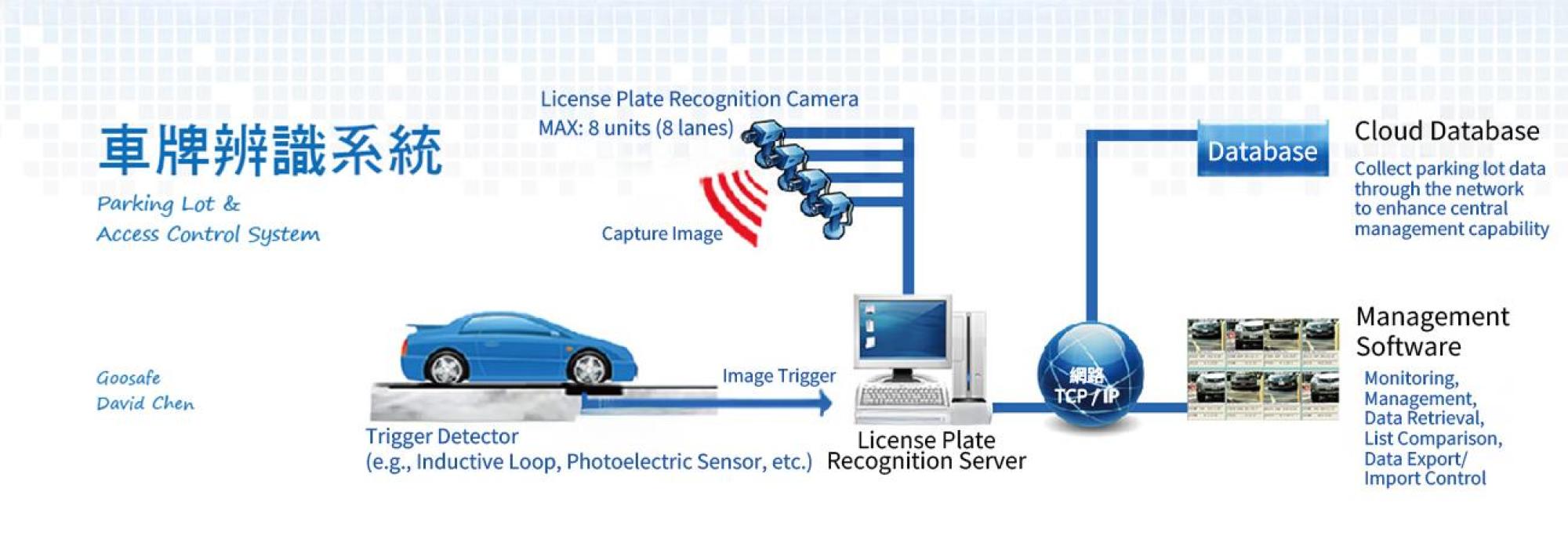
By using video stream-based automatic license plate recognition algorithms or inductive loop triggers, the system captures vehicle images and recognizes license plates. When a vehicle enters the community entrance, the automatic license plate recognition algorithm captures the vehicle image and identifies the license plate number, recording information such as the plate number, color, plate features, and entry time. Vehicles can then enter and exit the parking lot seamlessly, offering users a new and convenient service model.
The system automatically identifies the license plate number and features of vehicles entering the community, verifies the user’s authorized identity, automatically compares data with the blacklist database, and triggers alarms when necessary. It also enables comprehensive monitoring and management of the entire parking area, including entrance and exit control, internal management, data collection, storage, and system status monitoring. This allows administrators to perform supervision, maintenance, statistical analysis, data queries, and report printing efficiently.